
MYCELIUM

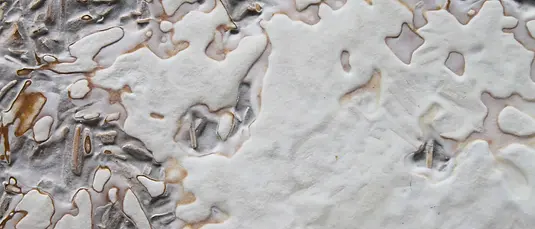
The mycelium is the vegetative part of fungi, made up of a network of fine threads called hyphae. These filaments spread through soil, wood, or other organic matter, forming a dense and often invisible web.
Mycelium plays a crucial role in ecosystems by decomposing organic material, recycling nutrients, and enriching the soil. It also forms symbiotic relationships with plant roots (known as mycorrhizae), enhancing the plants’ ability to absorb water and minerals. In recent years, mycelium has attracted great interest for its potential use in sustainable materials, food production, and medicine.
Mycelium is gaining significant attention for its unique properties. As a fast-growing, natural material, mycelium can be cultivated on agricultural waste, making it highly renewable and biodegradable. Its structure, which consists of a dense web of thread-like hyphae, offers strength, insulation, and flexibility, which designers and engineers harness to create eco-friendly alternatives to plastics, leather, and construction materials. In Living Interaction Design, mycelium is used, in experimental stage, alive, for its ability to produce electrical responses to differend stimuli and to decompose plastic.
